Corrosion In The Defence Industry
We Must Protect Our Military Assets From Corrosion. In Every Country, The
Authority Responsible For Defence Acquires, Operates, And Maintains A Large
And Diverse Array Of Physical Assets.
Why must we protect our military assets from corrosion?
In every country, the authority responsible for defence acquires, operates, and
maintains a large and diverse array of physical assets:
- Weapon systems, mostly made of steel
- Ground, air and sea platforms and vehicles, e.g. tanks, personnel carriers,
patrol ships, gunships – all mostly made of steel; as well as airplanes,
helicopters, having critical parts made of corrodible metals.
- Infrastructure, e.g. buildings, port and airport installations, much of it
built of steel-reinforced concrete.
Consequences Of Corrosion
Since armed forces must train and fight in all environments, including in very
corrosive environments, military assets are particularly vulnerable to
degradation caused by corrosion. This has important implications in the
following areas:
- Safety – A number of recent weapons-related incidents have been
attributed to corrosion – for example, corroded electrical contacts on US
Air Force F-16s caused spurious fuel valve closures (resulting in in
aircraft-loss), and corrosion-related landing gear cracking in F/A-18 s
resulted in failures.
- Battle-readiness– Corrosion routinely causes weapons systems to be
out of commission. For example, approx. 50% of the KC-135 aircraft’s
maintenance is attributable to corrosion problems.
- Financial loss– It is estimated that corrosion costs the US
Department of approx. $20 billion annually.
How Corrosion Affects Different Assets
Approx 2% of US Army and Navy aircraft mishaps are attributable to corrosion
between 1983 and 2013 (LMI – The Effect of Corrosion on Army and Department of
the Navy – AKN31T4/May 2015).
Mishaps primary attributable to corrosion were principally caused by: material
failure in the engine’s first-stage turbine, the air seal/second stage vane,
positioning lugs, bad electrical contacts.
Microclimatic effects both inside and outside the fuselage, caused by large
external temperature variations in high-humidity conditions accelerate
corrosion.
Apart from mishaps, corrosion also causes loss of combat-readiness.
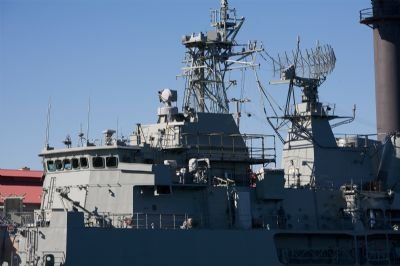
Ships are primarily exposed to atmospheric corrosion, caused by a combination of
high moisture and salt-laden sea spray, fretting corrosion, caused by the
repeated relative surface motion between loaded metal surfaces, typically
induced by vibration and structural flexing, galvanic corrosion caused by two
metals forming a parasitic galvanic cell with sea water acting as an
electrolyte, stray current corrosion caused by leakage earth currents flowing
out of the ship’s hull to the pier-side power supply earth (when the ship is in
dock), crevice corrosion, where water and sediment accumulate (due leaks and/ or
inadequate drainage) , and microbial corrosion is caused by certain types of
marine bacteria, which stick to the hull or accumulate in crevices.
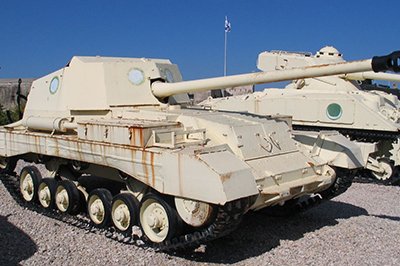
There is a great diversity of ground vehicles with a great variety of operational
profiles and operational environments. Corrosion-related damage predominantly
affects the vehicle’s structure, and is caused by humid conditions, water leaks
and/or defective water drainage from inner structures, and physical damage to
the protective paint layer, exposing the bare metal.
Physical deterioration of weapon systems due to corrosion leads to reduced
functionality, loss of structural integrity, reduced safety margins, and danger
to the operator and his surroundings. Corrosion also leads to increased
operating and support cost.
However, due to the diversity of weapons systems, the overall extent of
corrosion-related weapons mishaps is difficult to quantify.
Today, steel-reinforced concrete (i.e. concrete with buried steel reinforcement
bars) is widely used in most types of infrastructure – buildings, harbour
installations, defence installations (e.g. bunkers), and more.
Despite its appearance, concrete is typically wet, and therefore the buried steel
bars are in a wet environment. However, concrete is intrinsically very alkaline
(high pH), which prevents oxidation of its steel bars. Anything which
neutralises the concrete’s alkalinity, allowing oxygen to penetrate and
eventually to reach the steel bars, is a source of corrosion: Chlorine ions
(mainly from salt-laden seaside installations), water-borne atmospheric carbon
dioxide (which forms carbonic acid), sulphur and nitrous oxide, which are
essentially acidic.
Mechanical stresses and the effects of the environment (both temperature cycling
and humidity), accelerate corrosion, by causing or increasing cracks, through
which oxygen reaches the steel bars more easily.
In 2013, the US Department of Defence spent approx. $20.8 billion annually to
prevent and mitigate the corrosion of its assets – principally military
equipment, weapons, facilities and other infrastructure. While the majority, by
far, of these costs are attributable to corrosion issues on military equipment
and weapons, the cost of corrosion at facilities and other infrastructure was
estimated at approx. $1.9 billion annually.
A number of studies have been undertaken to assess the cost of corrosion for
different types of assets:
Aviation – Corrosion accounts for approx. a quarter of all maintenance
costs and about 15% of all system non-available hours (NAH) for US Air Force
aircraft and missiles (Annual Corrosion Prevention and Control Report for Fiscal
Year 2014; US AIR FORCE; DEC 22, 2014).
Naval – The overall cost of corrosion for US Navy ships was estimated at
$3.15 billion for the 2010 financial year (Estimate of the Annual Cost of
Corrosion for Navy Ships: FY2008–10 Update; LCI, DAC21T1/SEPTEMBER 2012)
Ground vehicles– Corrosion cost for US Army ground vehicles is 12.6 % of
the total maintenance costs for these vehicles. (CorrDefense Volume 9, Number 1
Spring 2013 Inside DOD: DOD estimates the Effect of Corrosion on the Cost and
Availability of Army Ground Vehicles).
Weapon systems– are very expensive in comparison with other military
assets, therefore any corrosion damage is much more expensive to repair.
However, it is estimated by the US Department of Defence that proper corrosion
prevention measures can save up to 30% of weapon systems maintenance costs
(Defense Science Board Report on Corrosion Control; OFFICE OF THE UNDER
SECRETARY OF DEFENSE FOR ACQUISITION, TECHNOLOGY, AND LOGISTICS; Oct 2004).
Infrastructure – Typically, corrosion is found on docks, piers, mooring
structures, bulkheads, retaining walls, and navigational aids (such as
lighthouses). The cost of corrosion at US Department of Defence facilities and
other infrastructure was estimated at approx. $1.9 billion annually (Defense
Infrastructure: DOD’s 2013 Facilities Corrosion Study Addressed Reporting
Elements; US GOVERNMENT ACCOUNTABILITY OFFICE; Mar 27, 2013).
LEARN MORE ABOUT OUR PRODUCTS

