Rust Is A Common Sight On Sea-going Vessels, Which Apart From Small
Pleasure Boats, Are Made Of Steel. The Prevailing Humid, Salty
Atmosphere Aggressively Does Its Work.
Corrosion also impacts safety. Statistics for ship hulls show that 90% of
ship failures are attributed to corrosion (MELCHERS RE. Corrosion
uncertainty modelling for steel structures. Journal of Constructional Steel
Research 1999;52:3).
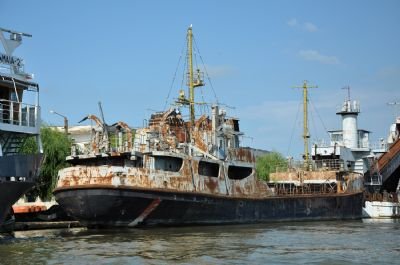
Ships are primarily exposed to atmospheric corrosion, caused by a combination
of high moisture and salt-laden sea spray, both of which directly attack the
steel through the smallest deficiencies of the pain layer.
Ships also suffer from fretting corrosion, caused by the repeated relative
surface motion between loaded metal surfaces, typically induced by vibration
(caused by machinery) and structural flexing (caused by sea currents and
wind).
Like all metal structures containing different metals, at the contact points
between different metals, galvanic corrosion takes place – by the two metals
forming a parasitic galvanic cell with the sea water acting as an
electrolyte. This cell’s action causes one of the metals, typically the
steel to oxidise.
Weak or absent earth connections between a docked ship’s hull and its
pier-side power supply causes leakage earth currents to flow out of the
ship’s hull (typically through a hull protrusion or sharp edge) into the
water, and thereafter to the seabed, which is the harbour power-supply’s
earth. The point at which current leaves the ship’s hull is prone to stray
current corrosion.
The abundance of sea spray causes water to become trapped and accumulate in
crevices, whether formed by silt, sand, marine organisms, structural
recesses, or sealing material. This forms a stagnant always humid area on
the metal, which gives rise to a hidden-from-the-eye corrosion patch, which
gradually erodes the metal and allows water to ingress inner structures.
This is known as crevice corrosion.
Microbial corrosion is caused by certain types of marine bacteria, which
stick to the hull or accumulate in crevices. Their biological activity
modifies local chemistry by acid production, thus accelerating corrosion.
Internal corrosion takes place in tanks, piping and pumping equipment in oil
tankers.
Corrosion Vicious Circles
Structural weakening – Since stress-bearing components of ships are made
of steel, any serious corrosion causes structural weakness, compromising
safety – In stormy seas, ships’ hulls are subjected to much torsional
stress, and normal-duty payload (e.g. ship cargo) also stresses the
structure. A weakened structure will flex more, increasing fretting
corrosion, and in turn further weakening the structure, as well as
allowing the ingress of water and dirt through weakened seals or through
welded/rivetted joints becoming porous, as explained below. And of
course, a sufficiently weakened structure can catastrophically fail.
Ingress of water and dirt causing more corrosion – Corrosion around
openings, often caused by salt water trapped under rubber seals, weakens
the effectiveness of these seals and allows water and dirt to enter
enclosed areas. Those enclosed areas may have an intricate internal
structure with many places where water and dirt can accumulate – usually
invisible from the outside. The accumulated dirt forms a sponge which
retains any water ingress, forming stagnant pools of salty water,
causing further corrosion.
Ingress of water causing electrical faults – The weakening of seals
mentioned above can also cause water to enter electrical connection
boxes and equipment, causing short circuits and the corrosion of
electrical connections.
Ingress of water causing flooding – Corrosion-weakened seals may cause
ingress of enough water to destabilise the ship. Corrosion-weakened
rivetted or welded joints (which may be below the water line) may become
porous, allowing massive flooding.
Which Parts Of A Ship Are Vulnerable To Corrosion?
The principal part of the ship vulnerable to corrosion is the hull &
superstructure, which are exposed to the elements 24 hours a day.
Marine engines are typically cooled by a coolant/antifreeze/anticorrosion
mixture circulating in a closed circuit, similarly to modern motor vehicles.
After passing through the engine, this mixture is cooled by heat-exchangers
in which sea-water flows in open circuit (analogous to the motor-vehicle
radiator). The sea-water side of the heat exchangers are prone to corrosion
due to the salinity of the water and the accumulation of sea-borne debris
which act as sponges causing stagnant salty humidity and thence crevice
corrosion.
Some ships, especially large cargo ships and oil tankers have ballast tanks,
which are used to change the weight distribution of the ship, or to change
its draft, in order to optimise stability. Ballast tanks being filled with
water, often sea water, are very prone to corrosion.
Ballast tanks do not corrode uniformly: The upper part, which forms an empty
headspace, even when the tank is full, undergoes thermal cycling (due to
ambient
temperature changes), contains much oxygen and is affected by vibration –
corrosion easily takes a foothold. The bottom part, which is often immersed
in
water is prone to the accumulation of marine microorganisms coming from the
seawater pumped into the tanks. Also, when emptied, a thin and salty
electro-conducting moisture film remains on the surface. Both of these
phenomena
cause corrosion.
Modern double hull tankers, with fully segregated ballast tanks suffer from
an
additional vulnerability: An empty tank acts as insulation from the cold
sea,
allowing the warm cargo areas to retain their heat longer. Since corrosion
rate
increases with temperature differences, the cargo side of the ballast tank
corrodes more quickly than it would in a conventional configuration.
Particular Vulnerabilities Of Oil Tankers
Oil storage tanks in tankers are vulnerable to “sweet” and “sour” corrosion.
Sweet corrosion takes place in systems containing only carbon dioxide, with
a low level of hydrogen sulphide (H2S partial pressure < 0.05 psi). Sour
corrosion takes place where the hydrogen sulphide’s partial pressure is
above 0.05 psi. H2S itself is not corrosive, but a water-containing gas
environment causes reactions which lead to corrosion of the inner
surface of the steel pipeline.
Sweet corrosion results in internal pitting of the pipeline, whereas
sour corrosion is much more severe, and can compromise the
structural soundness of the tank.
In addition, moisture ingress, and its accumulation in the tank
bottom aggravates corrosion. This moisture may also evaporate in
warm weather, and with a fall of external temperature, re-condensate
all over the internal surface of the tank.
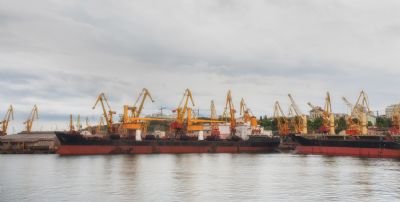
The annual U.S. marine shipping industry corrosion-related costs are
estimated at $2.7 billion. This is made up of costs associated with
new construction ($1.12 billion), maintenance & repairs ($810
million), and corrosion-related downtime ($785 million) (JOHNSON J.;
Cost of corrosion in ships, report. Dublin, Ohio: CC Technologies
Laboratories, Inc.; 2001; KOCH GH, BRONGERS MPH, THOMPSON NG, VIMANI
YP, PAYER JH.; Corrosion costs and preventive strategies in the
United States. US Federal Highway Administration; 2002. Report
FHWA-RD-01-156; DE BAERE K, ET AL. In situ study of the parameters
quantifying the corrosion in ballast tanks and an evaluation of
improving alternatives, NACE Conference Papers, Houston; 2011).
“A ship is composed of 90% steel. We estimate that approximately 25%
of the world’s steel production is destroyed by corrosion, in other
words, 5 tons per second. The costs arising from corrosion are
calculated to be several tens of millions of euro per year for
leading navies such as the French or American navies.”
LEARN MORE ABOUT OUR PRODUCTS

